Why Smart Home Technology Is Becoming Part of Modern Life
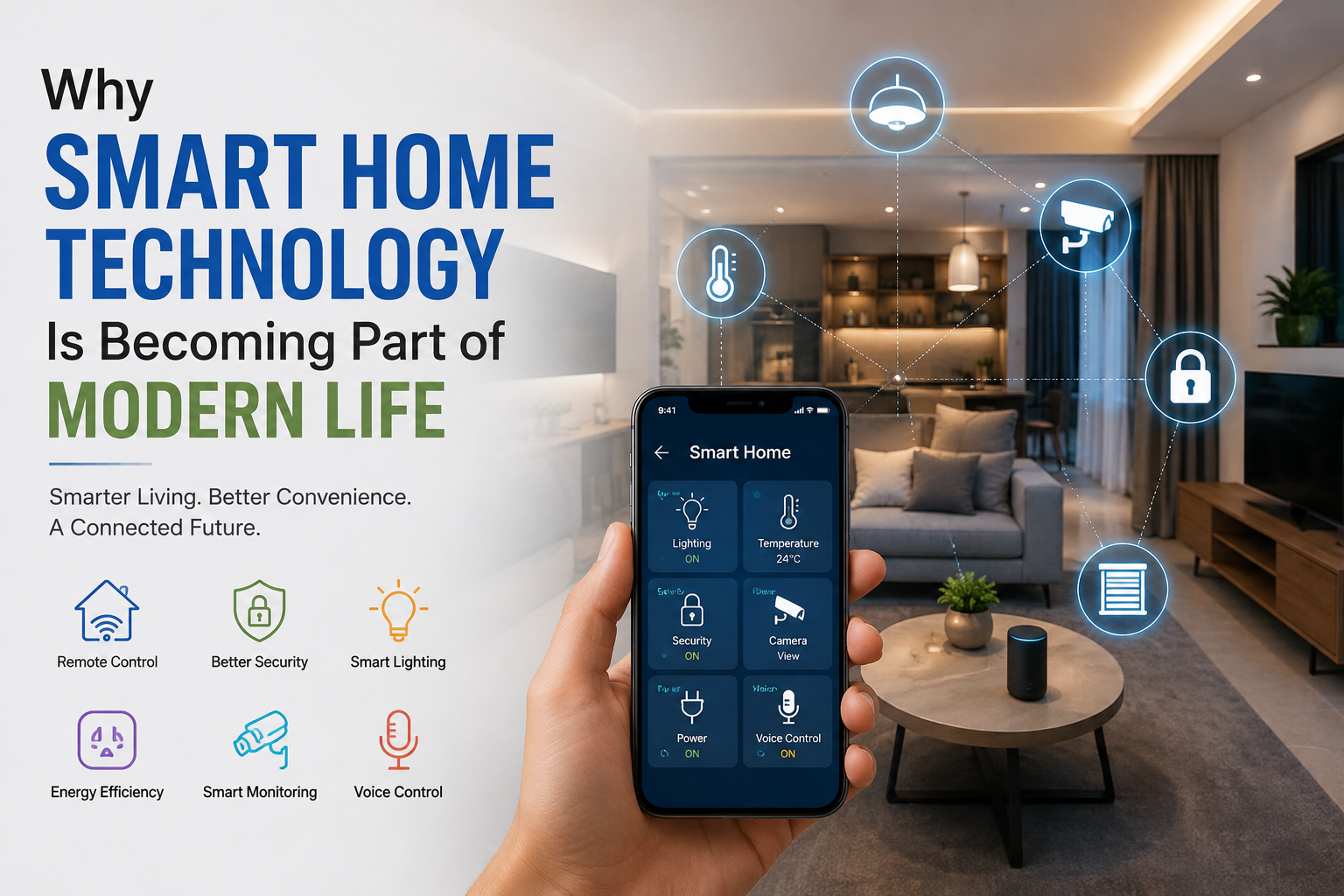
Why Smart Home Technology Is Becoming Part of Modern Life
Smart Home | Technology | Smart Living
Technology is changing the way we live. Things that once seemed futuristic—controlling lights from a phone, checking a camera while away from home, or automatically turning devices on and off—are now becoming part of everyday life.
This is where smart home technology comes in.
A smart home connects different devices and allows them to work together through a network, app, sensors, or voice control. The goal isn't simply to add more gadgets to your home. It's to make everyday tasks easier, more convenient, and more efficient.
What Is a Smart Home?
A smart home is a home where connected devices can be monitored or controlled automatically or remotely.
For example, you can use smart technology to:
Turn lights on or off from your phone
Control appliances remotely
Monitor your home with smart cameras
Use motion sensors for automatic lighting
Create schedules for different devices
Control compatible devices with voice commands
Monitor and manage energy usage
You don't necessarily need a fully automated house to get started. Even one smart bulb, plug, camera, or sensor can be the beginning of a smart home.
Why Are People Choosing Smart Home Technology?
1. Everyday Convenience
One of the biggest advantages is simple convenience.
Imagine coming home and having the lights turn on automatically, or being able to switch off an appliance you accidentally left running without going back home.
Home automation can reduce small repetitive tasks and make daily routines easier.
2. Better Home Security
Security is another major reason people are interested in smart home technology.
Smart cameras, door sensors, motion detectors, smart locks, and other connected devices can help you monitor what's happening around your home.
You can receive alerts, check your property remotely, and create automated security routines depending on the devices you use.
Research focusing on Dhaka also highlights home security as an important area for IoT adoption in Bangladesh.
3. More Efficient Energy Use
Smart technology can also help reduce unnecessary energy consumption.
For example, smart lighting can be scheduled to turn off when it isn't needed. Smart devices can also help users monitor usage and automate certain routines.
The important point is that smart technology doesn't automatically guarantee lower bills. The benefit depends on the devices, settings, usage habits, and how well the system is designed.
Still, better monitoring and automation can help reduce avoidable waste.
4. Control From Anywhere
One of the most useful features of connected devices is remote access.
Depending on the product and its ecosystem, you may be able to check or control your devices using a smartphone even when you're away from home.
That can be useful when you're travelling, at work, or simply relaxing on the sofa.
Smart Home in Bangladesh
Smart home technology is also becoming more relevant in Bangladesh.
As internet connectivity and access to connected devices continue to grow, more people are becoming familiar with IoT-based products and home automation.
The opportunity is especially interesting in areas such as home security, lighting, energy management, and appliance control. Recent research on Bangladesh's smart-home adoption points to growing potential while also noting challenges such as affordability, infrastructure, and digital literacy.
This means the future of smart homes in Bangladesh may not be about expensive, complicated systems.
It can start with simple and affordable products that solve real problems.
Where Should You Start?
If you're new to smart home technology, you don't need to automate everything at once.
Start with something useful.
For example:
Smart Lighting
Automate lights with schedules, motion sensors, or smartphone control.
Smart Plugs
Turn compatible appliances on or off remotely and create simple schedules.
Smart Security
Use cameras, door sensors, and motion detection to improve awareness around your home.
Smart Switches
Upgrade existing lighting or appliances with connected control where compatible.
Automation Routines
Once you have several compatible devices, create routines so multiple actions happen together.
The key is compatibility. Different devices may use technologies such as Wi-Fi, Bluetooth, Zigbee, Z-Wave, or Matter, so checking compatibility before buying can save you from future headaches.
Smart Doesn't Mean Complicated
A common misconception is that a smart home has to be expensive or technically complicated.
It doesn't.
You can start small and gradually expand as your needs change.
Maybe you begin with a smart bulb. Later, you add a smart plug, security camera, motion sensor, or smart switch. Eventually, these devices can become part of a connected system.
The best smart home is not necessarily the one with the most devices.
It's the one where technology actually makes life easier.
The Future of Smart Living
Smart home technology is continuing to evolve. Devices are becoming more connected, automation is becoming easier to set up, and different ecosystems are working toward better compatibility.
For homeowners, this means there are more ways to make everyday spaces comfortable, connected, and easier to manage.
At VEXABD, we believe technology should have a practical purpose.
That's why we're focused on bringing together smart products and modern technology that can fit naturally into everyday life.
A smarter home doesn't have to start big. It just has to start with the right solution.
Explore Smarter Living With VEXABD
Discover smart home products, connected devices, electronics, and innovative technology designed for modern living.
VEXABD — Smart choices for modern living.
Enjoyed this article?
Share it with your friends!